
Raymond Watts on Hurt People Hurt, recovery, and four decades in music.
Interview conducted by Charles Xu and Hannah Usaha, edited by Ruby Greenstone.
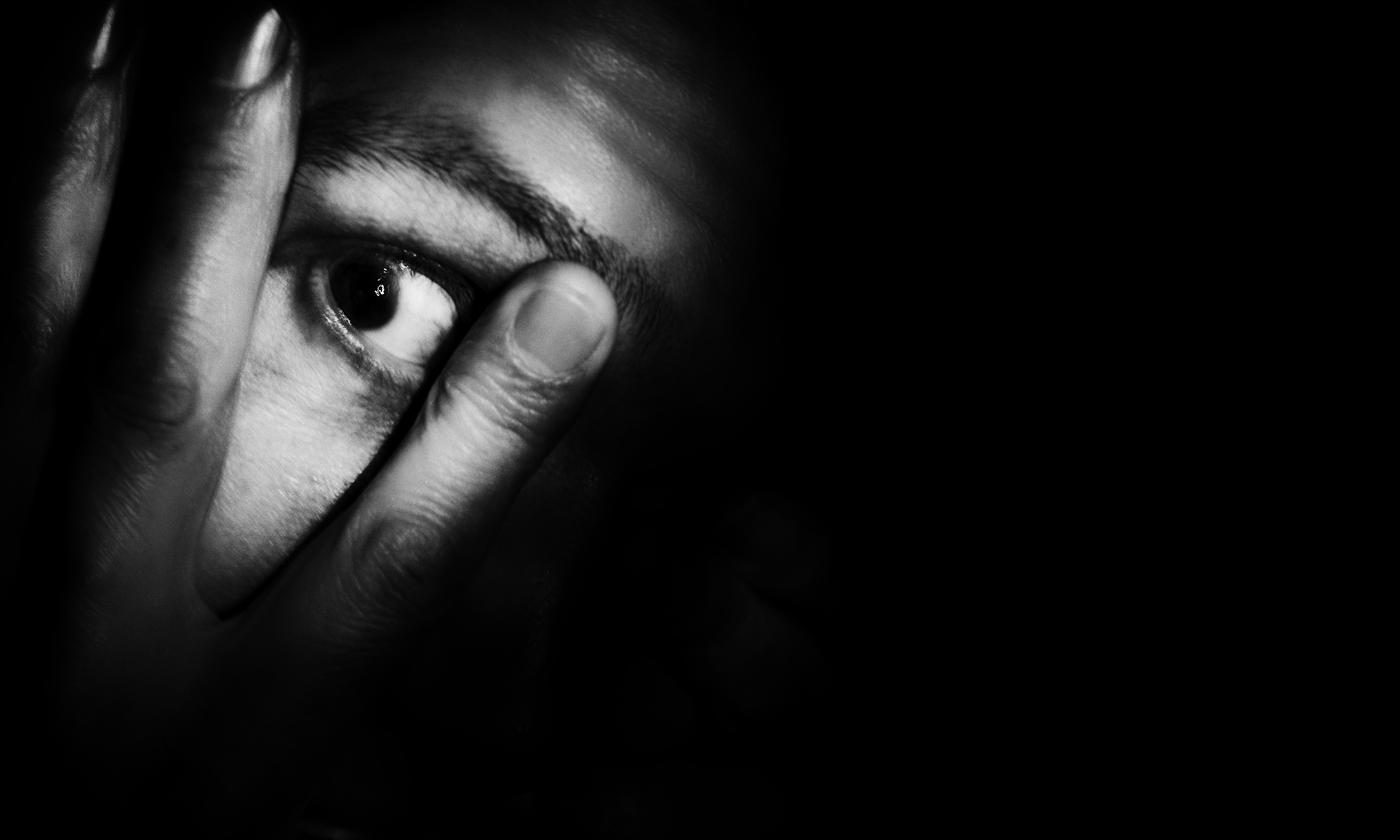
Being at the forefront of electronic music since the early eighties, Raymond Watts has no doubt made a name for himself as one of the generation's most prolific artists, whether as the frontman of PIG, a founding member and recurring collaborator of KMFDM, or through collaborations with Japanese alternative visionaries like Atsushi Sakurai and Hisashi Imai of Buck-Tick, Maki Fujii of Soft Ballet, and others. His latest record under PIG, Hurt People Hurt, was released on May 22nd, 2026 via Metropolis Records and is a testament to that legacy. Co-written with Jim Davies, the album is as abrasive as it is melodic, threading the operatic grandeur of “Tosca’s Kiss” through the industrial grit of “Sex and Suicide” and “Quid Pro Quo” with the ease of someone who has spent four decades making that tension feel not just intentional but inevitable.

To trace the arc of Watts' career, one would have to trace the arc of an entire subculture. Coming of age in a Europe defined by the violence and wrath of late seventies punk rock, Watts found his footing in the radical fringes of music; working alongside Psychic TV, setting up a studio in Hamburg's Gasstraße where he would stumble into the earliest incarnation of KMFDM, and doing live sound for Einstürzende Neubauten in the mid-eighties. These were not career moves so much as instinctive migrations toward whatever was most adventurous and most dangerous in the room, a restlessness that has defined every chapter of his work since.
PIG, the project that would ultimately become Watts’ most enduring vehicle, emerged from that same spirit of defiant autonomy. Assembled from tape loops, samplers, and a punk ethos that rejected the infrastructure of the major-label system, PIG has always occupied a deliberately uncomfortable position in the industrial landscape: too melodic for the purists, yet too abrasive for the mainstream. However, the project (thankfully) seems utterly uninterested in resolving that tension. Through a catalog stretching from the cutting wit of Praise the Lard in 1991 to the operatic darkness of Hurt People Hurt in 2026, Watts has maintained that position with a consistency that borders on the defiant.
What makes Watts a genuinely singular figure, however, is not simply the scope of his output but also the depth of the connections that he has sustained. Watts’ relationship with Japan, beginning with a formative trip with CLONES and deepening over decades into an extraordinary creative network, produced some of the most unusual collaborative music of the nineties and the millennium. Among them is Schaft's Switchblade, a record that brought together Watts, Imai, Fujii, and an unlikely constellation of contributors such as Coil, Autechre, and Meat Beat Manifesto. It is now a finely aged project that still catches ears today. Later, his friendship with Atsushi Sakurai of Buck-Tick would lead to Schwein, a project considered a near-spiritual successor to Schaft, yet one whose full potential was never realized due to label politics and conflicting obligations.
The years that followed were, by Watts’ own account, ones of near-absolute destruction. Lost in addiction, Watts effectively vanished from music for years, only returning with the support of Günter Schulz and En Esch with the release of The Gospel in 2016. What has followed since then is remarkable for its volume and its quality: a sustained creative renaissance, combined with an increasingly collaborative spirit, that culminates in Hurt People Hurt, Watts’ latest project under PIG, written in partnership with ex-Prodigy guitarist Jim Davies, that feels, in many respects, like the fullest expression of everything Watts has been working toward.
We sat down with Raymond Watts at 2:30 in the morning, Los Angeles time, to talk about all of it. Below is the conversation between Watts and FASE editors Charles Xu and Hannah Usaha.
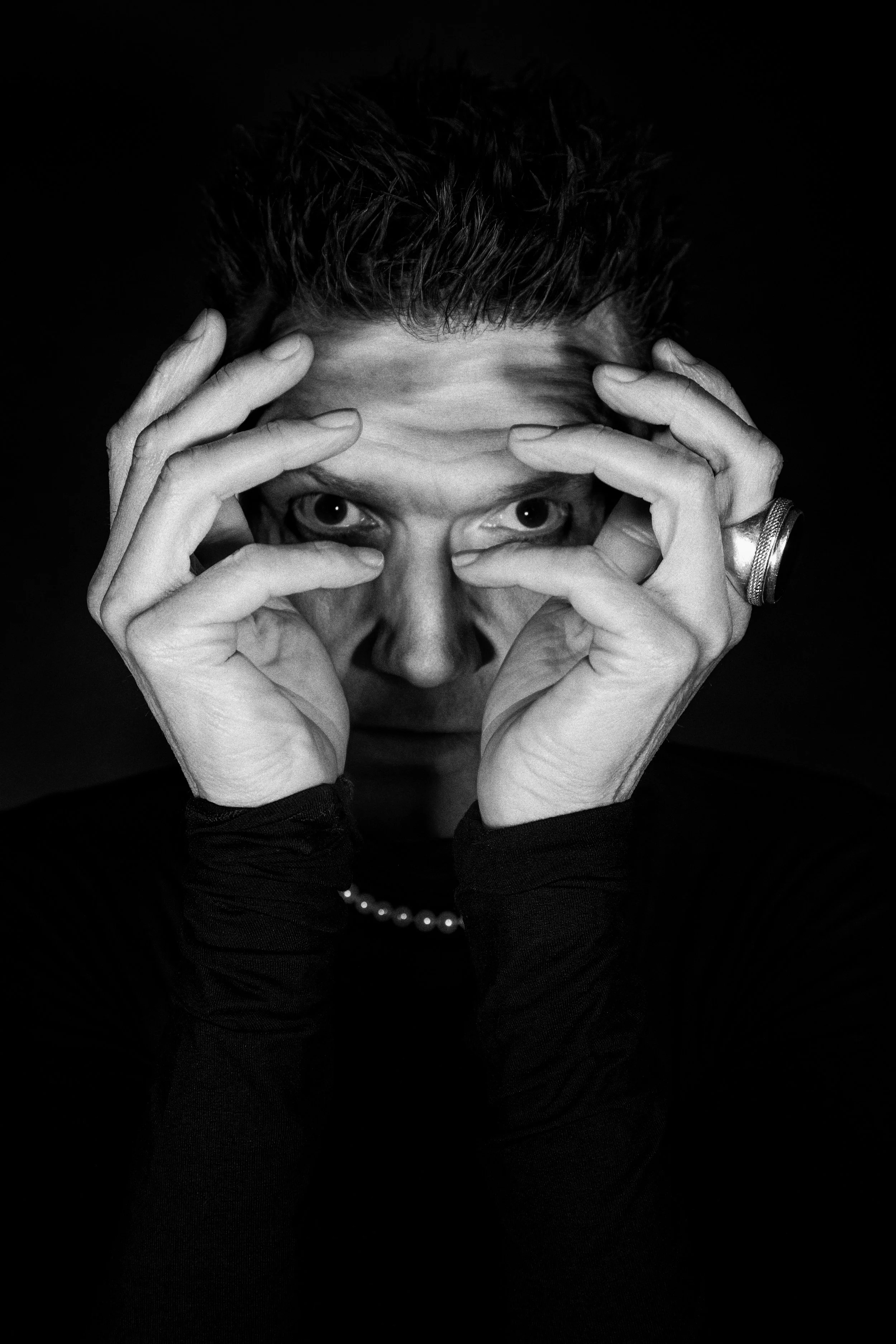
Hannah: Good morning, and thank you so much for joining us!
Raymond: Good morning to you! Where are you? Are you in LA?
Hannah: Yeah, we're in LA.
Raymond: So it’s right early in the morning for you guys.
Hannah: It's about 2:31 a.m. right now, yeah.
Raymond: Oh my gosh, wow! You should be tucked up in bed with a nice hot cup of cocoa. This is terrible. I'm sorry to keep you up so late. (Smiles)
Hannah: No, it's okay!
Raymond: Don't I tell you, it's been so unbearably hot in London. It's a bit cooler today, but I'm just not used to it.
Hannah: I've heard about that, oh my goodness. It's been the opposite here, actually. It's freezing cold in LA right now, which is weird.
Raymond: Well, even that is all part of the whole process of the world fucking going to shit, isn't it? It's either freezing and flooding…or boiling and…Christ. I never thought the future was gonna be like this. When I was a kid, I thought it was just gonna be flying cars and shit. (laughs)
Charles: Happy first week of Hurt People Hurt! It's been out in the world for a while now, and it’s been fabulous – the album has gone platinum at my place by now.
Raymond: That's great. I'm really pleased you like it, 'cause whenever I make these things, you're never really too sure. The amount of Imposter syndrome, which collides with my fucking doubt. Doubt is a huge thing for me the whole time. So, often, I go through this process: I mix it all, it's all done, and then I send it off for mastering. I've often called the guy up and said, "Look, I know how to do it properly now. Let's scrap that, and I'll start on the record again." And so it's nice, and I really appreciate it when people come with positive feedback. And even if it's not positive…well, at least I know I'm doing something right if I irritate them.
Charles: Yeah, that's great! So today, we'll go through your career in chronological order. Starting with your beginnings as a musician, all the way up to Hurt People Hurt. Does that sound good?
Raymond: Fine. Let's go.
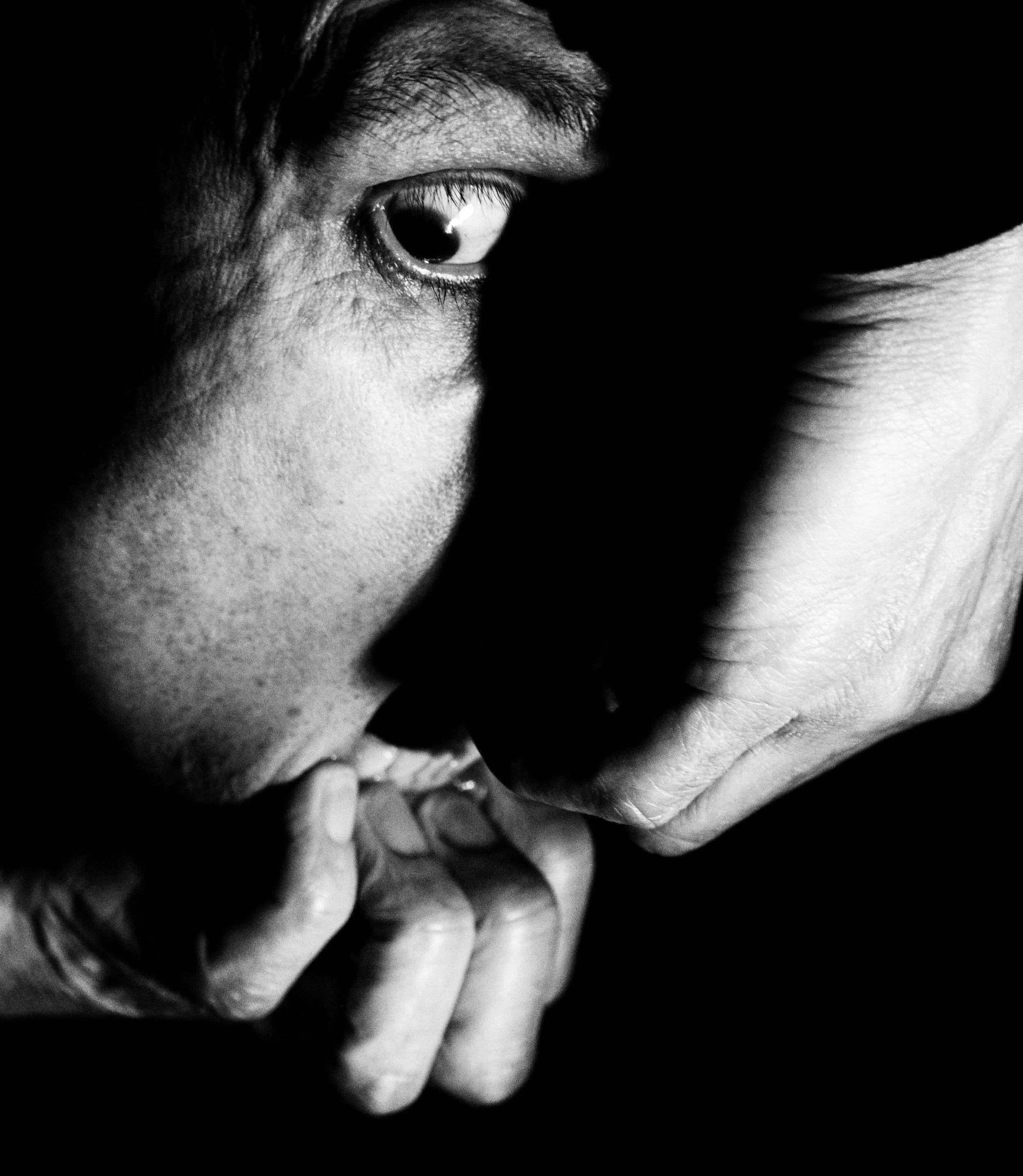
Charles: Growing up in England and having worked with artists like Psychic TV in the early eighties, you were part of one of the most radical moments in British industrial and electronic music, when bands like Throbbing Gristle and Cabaret Voltaire were redefining what music could even be. How consciously were you absorbing that atmosphere at the time, and how formative was that world in shaping the direction you eventually took as a founding member of KMFDM and with your solo project, PIG?
Raymond: When I got involved with bands like Psychic TV and started collaborating on early PIG and KMFDM recordings, that whole musical movement was quite an outlier – even to the mainstream of independent music. I wasn't really aware at the time that people would look back on it as a seminal moment in a genre. When you're very young, you're just pushing boundaries and pleased to be making music. One had no idea people would still be talking about it 40 years later.
Growing up in the suburbs, music was the only escape from the bland uniformity of it all. The first records I bought as a 10-year-old were Wagner's Tannhäuser Overture and T. Rex's Ride a White Swan. Looking back, it's quite funny: my musical tastes have always veered between those two pillars. The grandeur and pomposity of Wagner on one side, the silliness and fabulousness of T. Rex on the other, and everything I've been interested in since has been a web between those two posts. But then, punk rock happened, and that was exciting. I played in a little post-punk band, but it wasn't until I connected with the Neubauten scene in Hamburg and moved to West Berlin that I felt part of a critical mass – a scene that was punching against the rest of the world in a slightly different direction. That was very formative, and it still informs the way I work today.
The punk ethos is something I still adhere to. Growing up in the 1970s, everything was prog rock – very pompous, very polished. Yes, Emerson, Lake & Palmer, big labels, big studios. Punk told you that you could do it yourself, and that's what I've done ever since. Nobody tells me what to do. If I want a T-shirt, I get a design and go to the printer. Vinyl, artwork, lyric books – everything on a DIY level. In 1981, I made a cassette fanzine with my friends and sold it on the King's Road. Same idea. When I first started getting money together – very small amounts – I didn't want to go rent a big, fancy studio. I wanted to buy my own studio, like a laboratory where I could give birth to KMFDM, PIG, and all the other amazing bands I worked with at the time. So, that kind of do-it-yourself punk rock ethos is actually the strongest thing I've taken with me.
Charles: Yes! It’s also great that the DIY ethos is still very much alive, especially as a counter to the rise of artificial intelligence. In retrospect, what were those early years like, and at what point did you feel you had found something distinctly your own?
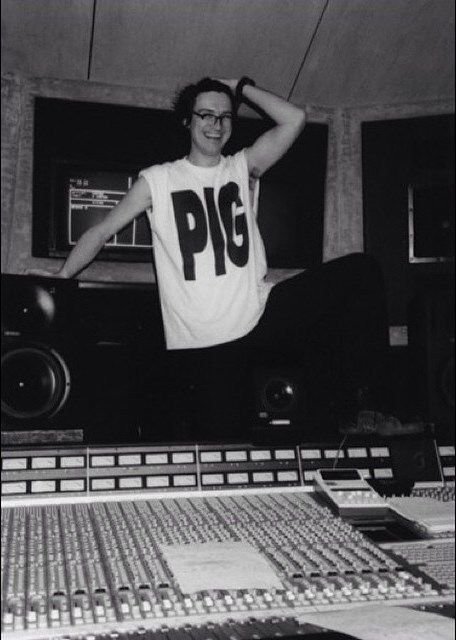
Raymond: I felt pretty empowered by the fact that I could do my own thing, and that goes back to Japan in 1981. After my little new wave band, some Svengali music producer got hold of us, decapitated our singer, and replaced her with a woman he thought would front it better. We made an album in two fancy studios thinking it was great – it wasn't – and then went to Japan for several months. The project didn't succeed, and I found it awful being a small cog in a machine run by a big publishing company trying to manufacture something. But I loved being in Japan. Having come from London, which was pretty broken and fucked up at the time, to find myself in 1981 in the middle of Tokyo was like landing on the set of Blade Runner. It was amazing, and a real eye-opener for me.
I came back with enough money to buy a little eight-track studio, and that's where I first felt empowered — the possibility of doing my own thing. I could sit there, learn to cut tape loops, and start making funny, obscure records with Genesis P-Orridge and the Neubauten crowd. I joined a Neue Deutsche Welle band from Hamburg called Abwärts, put the studio in a van, and moved it over there. I was also in a splinter band called Zos Kia, which was started by Peter Christopherson from Throbbing Gristle and early Psychic TV, along with John Gosling and me. That band still goes on, actually. We're headlining an industrial festival in the south of Germany in July, which is quite extraordinary when you think we were literally just fucking around in a studio 40-something years ago.
Hannah: So, moving on to your time with KMFDM, before KMFDM had a name or a sound, you were in Hamburg with En Esch and Sascha, essentially figuring it out in real time. What was the atmosphere of those earliest sessions like? Was there a sense that you were building something that would last, or did it feel more like an experiment that could be terminated at any moment?
Raymond: It felt like an experiment. I was working with lots of bands and had this studio, which was literally like a film set – quite extraordinary. The guys in Abwärts had found me this space in Hamburg. It was a very old building, which has since been knocked down, but there were red bricks, a garage up above, and people were welding cars together and all. Really freezing in winter – literally frozen blocks of ice. You went down; they opened these huge doors – like going into a submarine – with Germanic script on the chambers. Pretty fucking brutal down there, but it was my space, and I was working with lots of bands there.
F.M. Einheit from Neubauten and I were there doing things, and Mark Chung, who was in Neubauten when I was working with them, introduced me to this chap called Sascha Konietzko. He was playing in this funk band called KMFDM, but they hadn't recorded anything, and they were playing covers of T. Rex songs, or I don't know what the fuck they were doing. I'd just got hold of my first sampler. I was holding a Zos Kia record, and Konietzko came up and said, "Oh, I just bought that today." Zos Kia was this industrial band I was in. Anyway, I invited them down to the studio, and we started programming beats, and I started singing on a few songs. We were just fucking about, and it was quite fun. That's what turned into the first KMFDM album, What Do You Know, Deutschland?, which actually contained two PIG songs: "What Do You Know, Deutschland?" and "The Unrestrained Use of Excessive Force," because they didn't have enough material. Those tracks had nothing to do with them; they didn't play on them or anything. I was very free about giving tracks away, but certainly didn't have any feeling that there might be a furrow to plow there or that it might turn into a career for them all. I was just fucking around and doing my thing.
Hannah: Adding onto that, your involvement with KMFDM has always been periodic rather than fixed, and you've moved in and out of that project across the decades. How do you think about your relationship to the band? Is it more of a creative home you return to, or something more situational than that?
Raymond: No, I think there've been some quite well-documented difficulties within that camp. But we don't need to go into that, because it's just boring. I left because I was just doing other things that I found were more interesting. I like to write my own words and sing my own words, and I mean…they couldn't write words. They were just stealing words from T. Rex songs and Frank Zappa songs, and that's fine. English was their second language; that's cool. Well, I'm saying, “Sing in German then.” I actually sang in German [and] I can't speak German at all on early shit. For me, it's all about the process. The end result's the end result. I really love the process of doing stuff, and if the process isn't challenging or interesting, or if people come in with ideas I find a little trite, I get drawn to doing other things. Mm-hmm. So after a couple of albums, I played with a guy called J.G. Thirlwell's band, called Foetus, which I found quite exciting. That had some of the guys from Swans, and that was great fun live too. Some great, great gigs there actually. I think Suicide opened for us, and some people I really admired. I learned a lot of course, 'cause he's a true innovator. I was drawn to that and to working on those instrumental projects like Steroid Maximus, lots more PIG stuff, and various weird things. I'm like one of those crows or ravens that pick up shiny stuff, and I just go, "Oh, looks interesting. I wanna go." That's maybe shiny or dark or gloomy or whatever, and people I'd wanna work with, I resonate with. So when I went back to the KMFDM camp, I think there'd been some shit spoken or something not – some usual bullshit, and I had to contact them. That turned into us doing an EP together, called Sin Sex & Salvation, which went well. Then, I was introduced to the great Günter Schulz, who's a really, really top guitarist, and I was really drawn to his guitar playing. The idea of working with Günter on Nihil, which was an album we made in about '95, was a great attraction. So I rejoined for that, and then was doing other things. I was doing bands in Japan as well. So, it was just a thing, but I think we did two very successful long American tours that raised the profile of the band, which I think people were probably quite happy with. Then, PIG moved to Trent Reznor's label after I'd opened for him.
Hannah: Great! This is really out of personal curiosity, but KMFDM has developed a significant new following on social media, with younger listeners discovering the band through platforms like TikTok and YouTube. How do you feel about the band being introduced to that generation, and does their engagement with the music change how you think about the legacy of KMFDM?
Raymond: Honestly, I've never even thought about it, and I don't think about it. I didn't know that, and I honestly have no interest in it whatsoever. I have put occasional things on TikTok, but it's a complete mystery to me.
Hannah: Yep, it’s better if it remains a mystery.
Raymond: PIG has always been a willfully obscure band. I've always been really happy with where PIG has been in terms of [community]. PIG has a small congregation, and I'm really happy about that. We had our moment in the '90s with KMFDM, and I was involved in a couple of bands in Japan that had quite a lot of clout. When I toured in the States, we weren't a big band. But with KMFDM, that kind of touring just didn’t really make me happy. Maybe it was the kind of touring, or the people I was working with, or the kind of music I was doing. Some of it, obviously, I was very proud of, but I really like the level on which PIG works, this punk rock DIY ethos. Since I came back to it in 2016 and started touring again after 12 years off the pitch, I found that I'm much, much happier traveling around in a van, playing in small clubs, being really busy, having contact with the audience, not being huddled away in the back lounge of a fucking tour bus and filling my head with bullshit drugs; isolating and being in some dressing room where people are miles away, just doing your shit and fucking off.
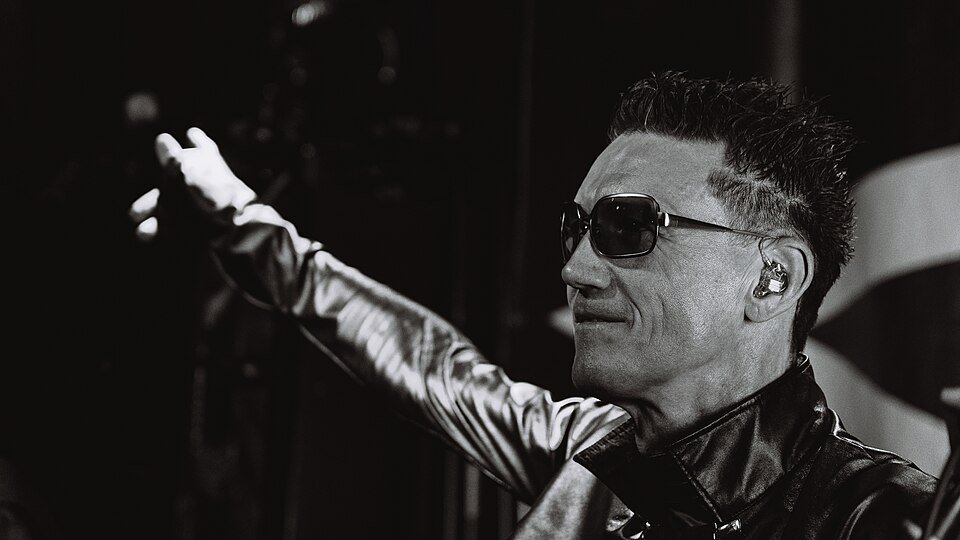
I'm much more up close with the people who come; I've been asked to open for a few people this year in America, and I'd just rather go and do my own little tour. Sometimes I don't mind opening for people, but I generally prefer to have my own thing with my own people and surrounding. One of the differences now is [that] I really surround myself with good people in the PIG camp, and that makes a massive difference. The idea of touring at this level, where we literally ride in a van, has made it so much more visceral for me. Just the nature of the way we travel. When I travel in a van, there are windows on both sides, and I can look out.
When you're on a tour bus, you sleep in the back, with the window behind your head. You're always driving at night, and you don't see anything. You sleep in a fucking coffin with a load of smelly musicians. It's fucking ghastly. [With PIG,] I sleep in a motel, can put my suitcase on the floor, have a shower, and travel during the day. I look out the window, and it's gone from isolating tour bubble to road trip. A road trip is a much more strong experience for me. And I'm busy because we're on a level where we carry our own shit, and I don't have hours and hours waiting around to get into trouble. So I'm very, very glad and feel very lucky to be able to do the thing the way I do it now.
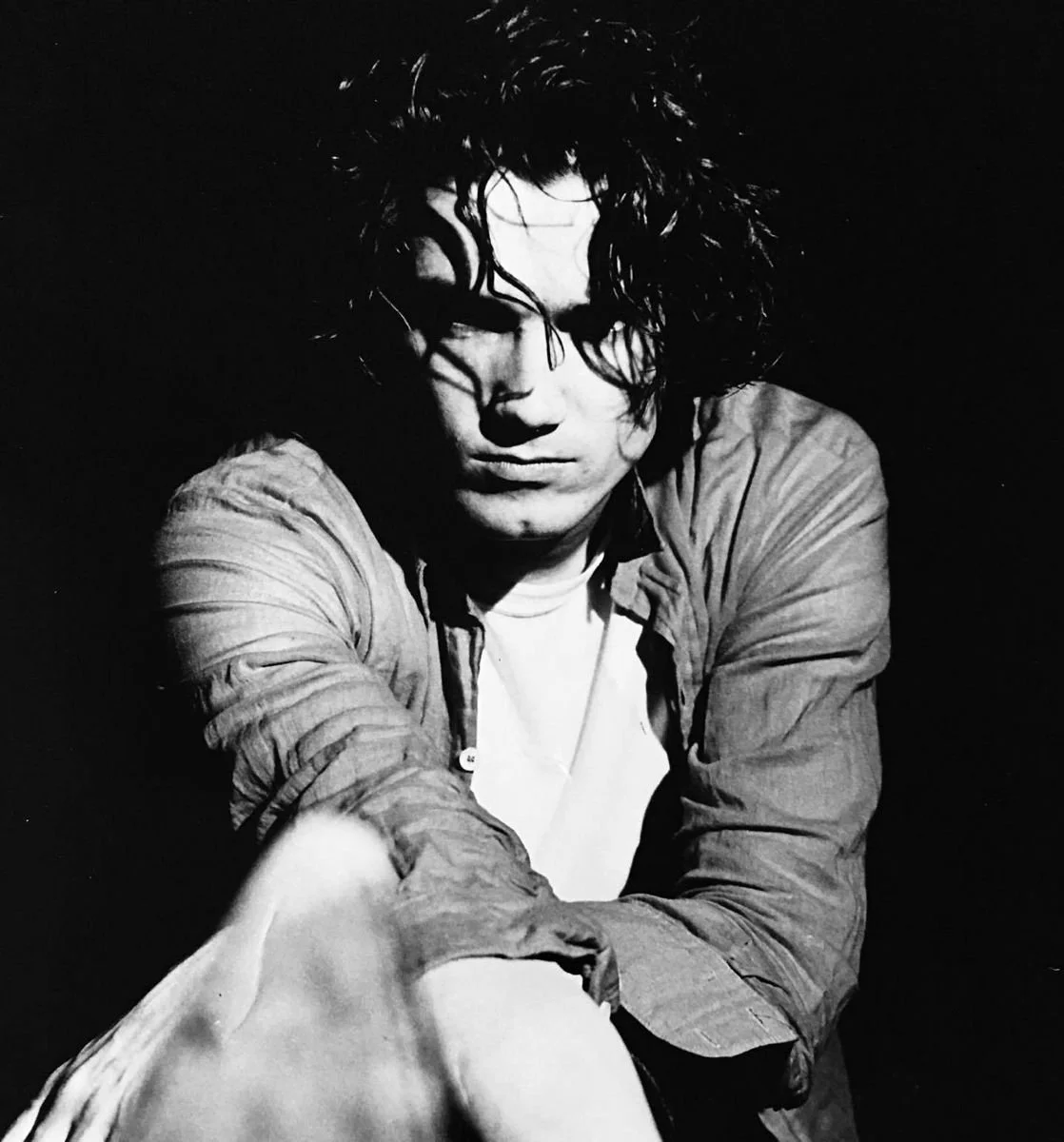
Charles: You brought up your experience with Nine Inch Nails, and I actually wanted to expand on that: In 1994, you toured with them in the UK and shared a stage with what was among the most culturally charged bands in the world at that moment. What was that experience like, and did that influence your later endeavors with PIG at all?
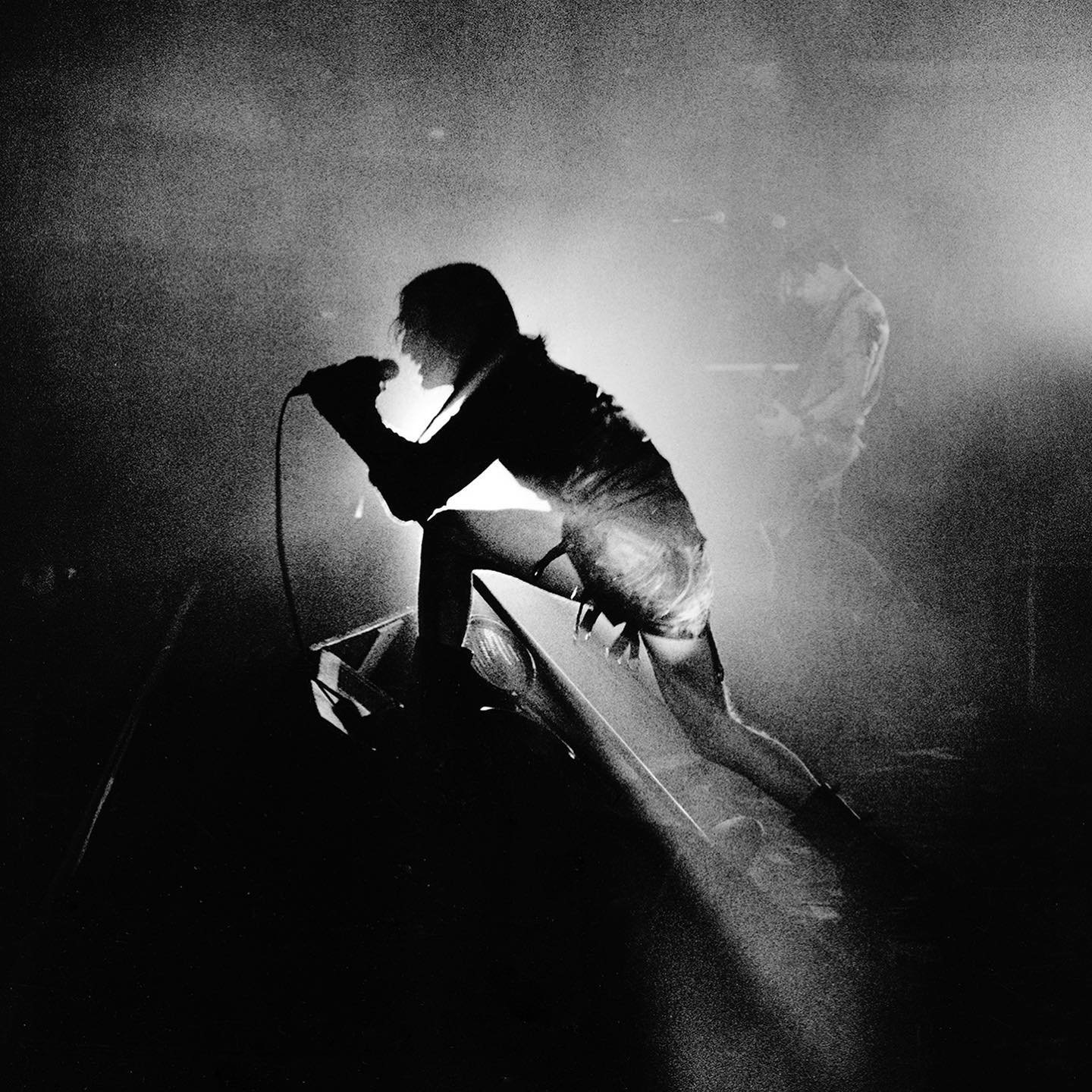
Raymond: I suppose you get influenced by everything, don't you? I get influenced from picking up a tabloid newspaper or the Weekly World News, or riding in the back of a taxi and hearing what some guy says, or looking at a billboard. Everything influences you, of course. But to me, with that band and that lineup he had in ‘94, and some are still with him, like Robin Finck. Seeing them play every night was really quite an education in [their] level of commitment and dedication. Obviously, everybody was much younger then. The intensity was quite amazing to watch every night. They were absolutely at the peak of their powers. I'm not saying they're not great now, and it's fabulous.
Trent Reznor, 1994. Photo by Anton Corbijn.
Trent is a fucking proper, proper songwriter and a proper fucking artist. He's really got the chops, and he knows one end of a studio, and he knows one end of a song, and he uses the ammunition in his arsenal to the best. He uses the whole fucking canvas from there to there, and I really admire that. He's quite a one-off, and he's really pushed the boundaries, which I have tremendous admiration for. I suppose that started then when I was watching them, because I just thought they were fucking awesome.
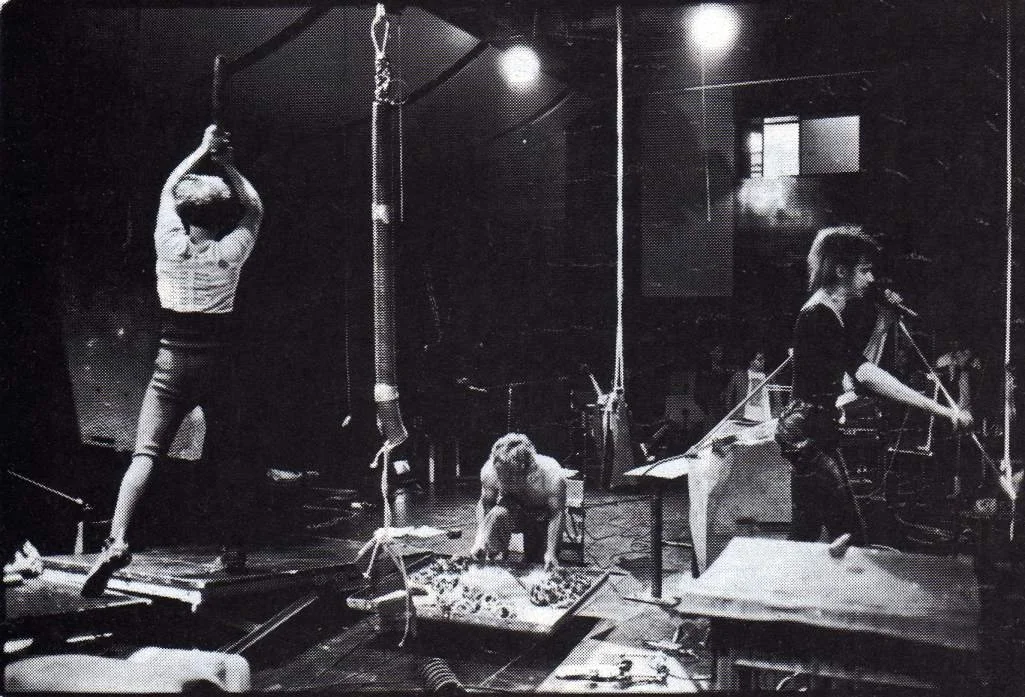
The other time I felt that was actually when I was working with Neubauten, between '84 and '86. I'd often record Blixa's vocals when it was just him and me in the studio, and sometimes all that. I'd just go and do vocal recording with him, and I loved doing that. Working with them live was another pointer; it was the same level of intensity I was talking about with NIN back then in '94. Doing the live sound for Neubauten between '84 and '86 was like riding a huge, great motorbike with little steering.
It was incredibly exhilarating and exciting. You're playing the instrument of the band; it's the instrument [of] mixing. There was no set list; it was completely anarchic. N.U. would be throwing Molotov cocktails around. It was really fucking challenging and really exciting, and sometimes woeful and dreadful, but other times the roof would come off.
That was another thing that really set a benchmark for me, and when we toured PIG, we inevitably picked this up.
Charles: As someone who was present during one of the most genuinely radical moments in electronic music, do you think we're on the cusp of something similarly adventurous today? Or is it something unique that cannot be replicated?
Raymond: Well, nothing can really be replicated, can it? Once it's done, it’s done. To be perfectly honest, each time there's a new musical wave, whether it be drum and bass, or this, or that, or trap, for the people who are icebreakers in that movement, it's thrilling and exciting. I don't think you experience a wave like that from the outside.
There may be thrilling new things coming around the corner, probably. I would think they may not even be related to music now. If you're a young person and you need to tear the whole house down, you may not even be drawn to music. You may be drawn to something completely different – some other art form.
So I don't know. I get really excited about working on PIG records, the next PIG record, the people I'm working with, and bringing new people into the orbit of PIG, which never used to happen. It used to be me, myself, and I, and now I'm much more interested in something broader. Things have changed for me, but I don't know if I can really answer your question. There may be something coming down that's revolutionary like that, and it will feel like that to the young people in it, but it may not be in music.
Charles: Before we move into Hurt People Hurt, I do want to ask some questions about Japan, which you’ve brought up a bit earlier. I’d like to focus specifically on Schaft – the project you had with Hisashi Imai of Buck-Tick and Maki Fujii of Soft Ballet. Schaft occupies, to say the least, a unique place in electronic music history as an incredible Japanese-British supergroup that was unlikely to have existed. How did you first come into contact with the two, and what initially drew you to the project?
Raymond: I was in Japan in '81 with this funny little pop band, and then after I came back from West Berlin in 1990, I came back to London. I was doing PIG, but I was [also] helping a friend of mine who wrote really beautiful little pop songs, a guy called Julian Henry in this band called The Hit Parade, and we'd been at school together. He's very much in the mold of those indie bands like Orange Juice and Haircut 100; he loves all that stuff. He was an incredible punk rocker very early on in 1976 and spent every night at punk gigs, dragging us along sometimes when we were really young teenagers.
I was the musical director and producer for several of Julian's albums in the early '90s, while doing my PIG stuff, and we started touring The Hit Parade in Japan. I had a friend there named Yoshi Hoshina, who became my manager, and he introduced me to a wonderful A&R guy named Yoshito Kubota, who was at a great label in Japan called Alfa, which did YMO, Depeche Mode, and all these really beautiful box sets; really cool label. He very kindly decided to take on PIG, and I did some releases with them. When Alfa went bankrupt, he moved to JVC Victor and took me in, introducing me to the Buck-Tick guys, the Soft Ballet guys, and all that lot. And weirdly, I wasn't licensed as a foreign artist; I was signed as a domestic artist, which was quite unusual.
So, I was taken care of by the domestic side of the label. Although they were a major label, they never told me what to do. They just gave me complete carte blanche. There was no control. It was brilliant. I'm always surprised when musicians say, "Oh, and the label wanted me to change my style," and I'm going, “That's never happened to me.” That's really weird. I've always just done exactly what I fucking wanted. I find it really odd that so many musicians go, "Oh, and the labels won't..." I just go, "Fuck that. That's so odd." You know, yeah, imposing producers on artists. Very weird. So that's how I met those guys. Then, Imai Hisashi from Buck-Tick said, "We've got this project called Schaft. Would you like to be involved in this thing and do some touring and a remix album?" And that's what I did. (Charles holds up his personal copy of Switchblade; Schaft’s debut album) Oh, and you've got one right there! How nice. We toured it, and it was great 'cause I had a little bit of money, so I was able to get Keith LeBlanc, who came and played on a couple of my songs, and a drummer whom I've long admired from all his work in Tackhead and all those great bands.
And of course, he was the drummer in the house band for the Sugarhill Gang and played on all those incredible, legendary rap records. It was nice to be able to just have the freedom to get in with people that you wanted; some great people [were] involved in that, and it was really good fun. Then I met Atsushi Sakurai from Buck-Tick, and we had a weird connection and became very close friends, which led to another project called Schwein, a bit later.
Charles: Wonderful! Maki Fujii, as a member of Soft Ballet, established himself as one of the more uncompromising auteurs in Japanese electronic music. What was it like entering a creative space defined so strongly by his sensibility, and how did you navigate your own voice within that?
Raymond: Well, they gave me complete and utter free rein to do whatever I wanted. Nobody ever gave me any notes, and I didn't really give them notes. I was in London; they sent me some stuff, I sang on it, and I sent it back. I built a few songs completely and sent them over. Sometimes when they sent me stuff, I went, "What the fuck am I gonna do with this?" It was so left-field, it was quite experimental and weird with some of the more noise tracks [they were doing]. Maki had a great touch with electronics. He had a really good touch, really sparse. We did a song called “Cold Light” on that album. I remember he sent me a very simple synth part, and it immediately just lit this spark in me. There was a nice little marriage of words and music for a minute there, and I enjoyed it.
Charles: I was watching the Switchblade Visual Mix on VHS earlier today, which inspired this question: Performing as lead vocalist for Schaft’s live concerts placed you in a somewhat different role from what you typically occupied in PIG or KMFDM. What was that experience like, and how did performing in Japan specifically shape it?
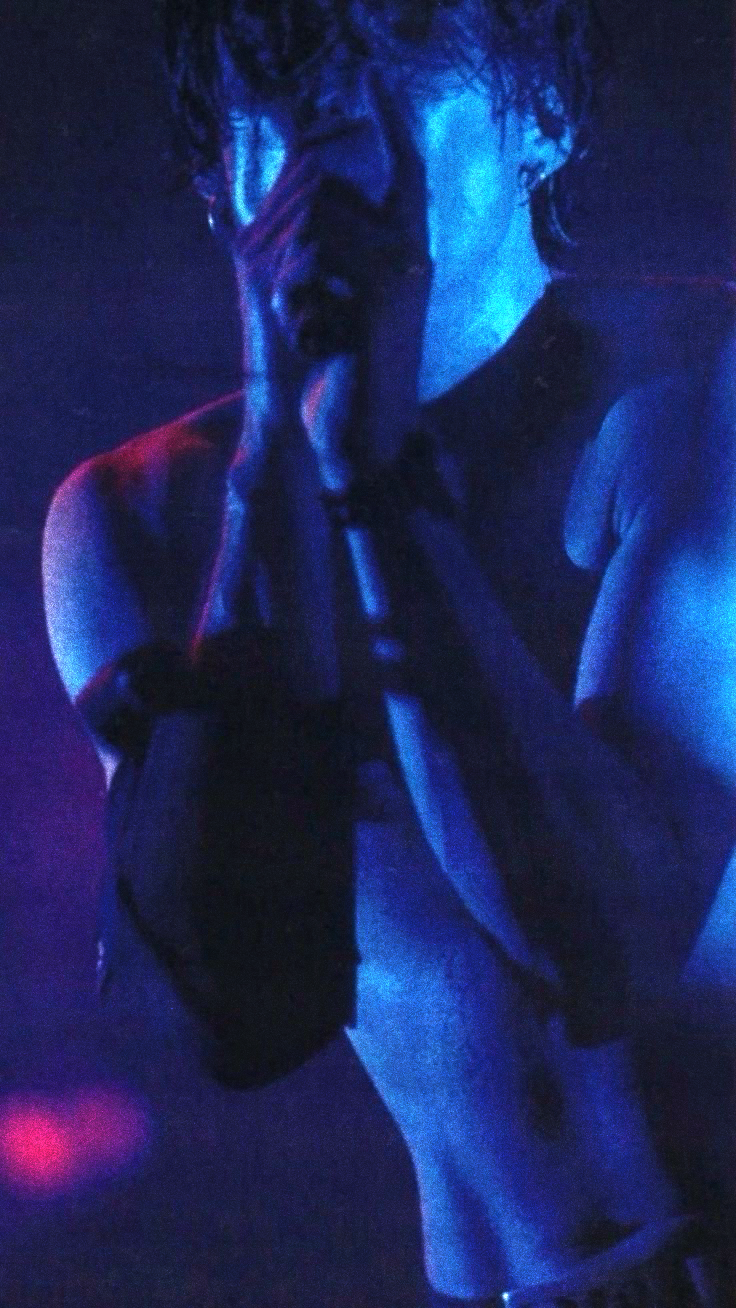
Raymond: I mean, they were big fucking halls for a start, and I can tell you that there were a lot of people there. As I said, I've been inspired by and resonated with these artists who were quite confrontational, and that was part of the language that we used. I remember there was a big crew involved in the Schaft thing; lots of lighting people and stage managers. I was a little bit more out of control, shall we say…than they were used to, and that ruffled a few feathers. There was one stage manager who thought it was a little bit – not with me – but they were a little bit confused and shocked by the level of chaos, confrontation, and stuff being thrown around [that] caused a few wrinkles in procedure. Not from the guys in the band, they were all cool. Of course, I have to mention that the greatest thing was also being introduced to Motokatsu, who was the drummer in the live band and also played on Switchblade. He's playing with me in Tokyo next month. He was the drummer from this fabulous band called the Mad Capsule Markets, and he's such a lovely bloke. It was a great thing to be involved in, but it was a complete mishmash of cultures 'cause everything in Japan is a little bit more – particularly at the time – more structured and organized, and I came in [more chaotically]. They were like, "What the fuck?!" Of course, it's the area where two things rub up against each other, [and] the most interesting shit happens, like tectonic plates where they rub up against each other; that's where all the volcanoes and all the earthquakes happen. It was a fantastic collision of two cultures, and quite exciting.
Charles: Certainly. Switchblade is undeniably an extraordinary album for any time period, let alone 1994 Japan. It featured contributions from Coil, Autechre, and Meat Beat Manifesto; just an extraordinary concentration of talent around a single record. What was the atmosphere of the project, um, like, at its peak, and do you feel that album has been properly understood in retrospect?
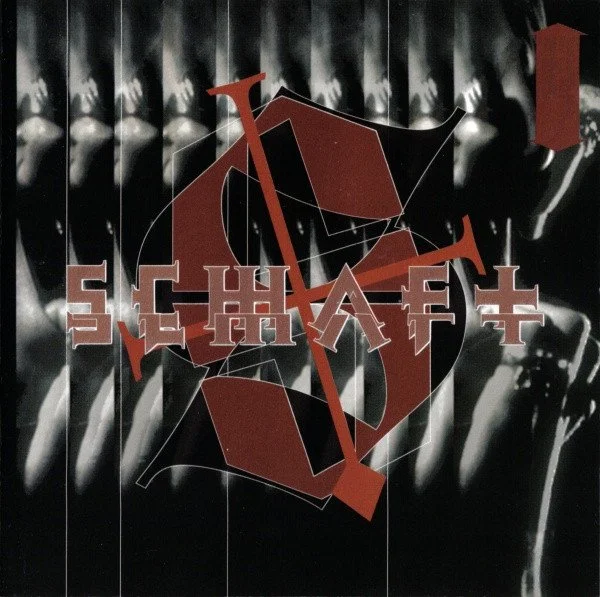
Raymond: I wouldn’t know if it's been properly understood, [as] people make of it what they will. I think, over time, it has probably [aged] like fine wine and [has] ripened quite well. Maybe it gets a little bit more attention now, but not much. All I can say is it was a great thing to be involved in.
At that time, we were able to attract – like those artists you’ve named – really interesting people to be involved in it. We actually made a great video for the song "Arbor Vitate". I was able to get Philip Richardson, my video guy, and we actually had some money to really push the boundary. Not a huge amount by the standards of the day, but for us, as independent underground artists, it was quite great to have a little bit of ammunition to work with.
Charles: Having spent decades working with Japanese artists across different contexts, such as Schaft's industrial experimentalism, Schwein's more volatile energy, and your friendship with Atsushi Sakurai, do you feel there's something in the Japanese approach to music and artistic identity that fundamentally resonates with how you work, beyond those personal connections?
Raymond: It’s not just the music; it's the whole culture. I was lucky enough to be in Japan for [practically] all of the '90s; as I said, I was signed as a domestic artist and made a few records through them. Maybe people say, "Oh, you should have concentrated more on the American market in the '90s when the industrial thing had its moment." But it's not just Japanese music and the food; I resonate with the culture and the way people are, and I love that.
But also, there's another side of me that feels completely alien. I was telling you about when I was a child, being brought up in a uniform suburban housing estate; I just felt like a fucking alien. I just couldn't relate, [and] it was so weird. I felt that also in Japan.
I felt at home, but I also felt like an alien. I feel at home being an alien, and I feel like I'm an alien when I'm at home. It's certainly my kind of favorite place to be, and I can't describe it any more than that. So it's not really just about the music; it’s just a place where I feel at home, but completely alien. It’s those two conflicting things existing simultaneously in here – kind of schizophrenic.
Charles: Incredible. Now, moving on to your latest album, Hurt People Hurt.
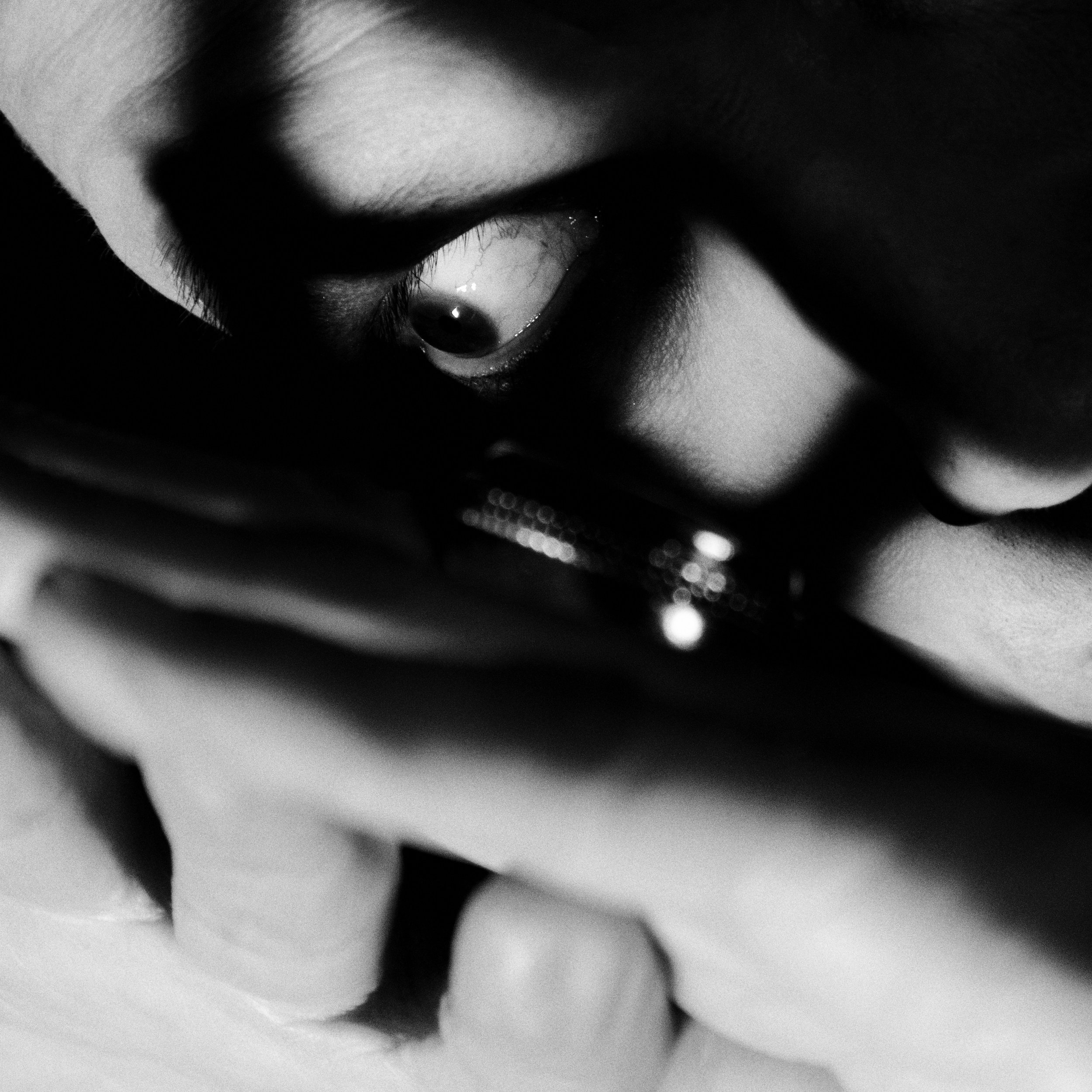
Hannah: There's a strong operatic overtone with your first single, "Tosca's Kiss" – what were some of your inspirations behind this song, especially with the title referencing Puccini? Is there also a connection to your experiences with Italian opera?

Raymond: That is inspired by just one scene in the story of [Tosca]. Weirdly, I'm going to see Tosca again tomorrow night at another opera house, one in the country called Glyndebourne. It's a new production, which I'm really looking forward to. Got rave reviews last week when it just premiered. I luckily came to opera in the last few years in my life, and I found that the stars aligned, and it took me to this place that was just like being on drugs.
You've got the singing and the orchestra on point, and the costumes and the lighting, in this fabulous venue; everything coalesces into this extraordinary experience. I've come to it late in life. Of course, Tosca is one of the classics. Tosca is the protagonist; she's with her lover, and there's this evil police chief who wants to sleep with her. He said, "Unless you sleep with me, I'm gonna kill your boyfriend," because the boyfriend is a political activist.
So, there’s this horrible triangle, and she's put in this terrible situation: Does she sleep with the police chief and save her boyfriend or whatever? I'm not giving any spoilers away. She's driven to murder him, and as she stabs him, she says, "This is Tosca's Kiss. You want a kiss, this is what you're gonna get," and she fucking kills him.
It's great, of course, but it's also a tragedy, and I just thought it was so interesting; the idea of desperate times requiring desperate measures. Sometimes, there's no way out, and it's just completely beyond you. You're put in this situation where the only thing to do is something dreadful that is the end of you. That little moment inspired that song, and nothing more than that.
Charles: The multilingual construction of "Quid Pro Quo" with Latin, German, and English all colliding in the same track feels very deliberate in the best way, especially with "Nihil ex nihilo fit" – apologies if I pronounced that wrong – running as a kind of mantra throughout. What was the thinking behind that, and do you find that switching between languages gives you access to emotional registers that English alone doesn't?
Raymond: Yeah, and you know what? It is just really good fun. I made this recording called “The Unrestrained Use of Excessive Force.” It became one of the tracks on the very first KMFDM album, which I just did on my own for fun, and was just writing my very best German, which was absolutely dreadful and nonsensical because I was just drawn to it. It's really interesting; I wrote the German words on Quid Pro Quo, and it's like another form of dressing up. I [then] called my mate En Esch, and I said, "Does this make sense?" And he goes, "Oh, maybe you need to just put an umlaut on there or change that word, but yeah." He does the vocals with me, and it's just another way of bringing him into it. Instead of him singing in English, which he does quite a lot on PIG Records, and with me going into his area and singing some German [with him] on a PIG record, it just kind of fucks with things. And of course, Quid Pro Quo is just a classic saying? It's so resonant, always. “Nihil ex nihilo fit,” nothing comes from nothing. Just a bit of English, Latin, German. You gotta do it, really.
Hannah: The title of the album, Hurt People Hurt, expands on the central theme of pain prevalent throughout the PIG canon, though the context in which you are writing is significantly different from darker times in your life. How has your relationship with pain evolved throughout the years, and how do you write about it in the different headspace that you are currently in?
Raymond: Interesting one. Everything changes, right? It's fairly well documented that I stopped doing PIG for many, many years. I was lost in the abyss of addiction. I lost everything and was in about the darkest place. I nearly died and all that sort of shit in hospital and rehab and things; I was addicted to a multitude of sins. For me, it never ever seemed possible if you had said to me, "You can get your life together and live without any of this shit." I would've said like, "You've got more chance of getting me to live on the surface of Saturn. I don't speak Saturnese. There's no fucking oxygen on Saturn. It's about, however, whatever the temperature is, and I can't get to fucking Saturn. How could I live there?" That was what living my life without a multitude of substances would've sounded like to me. Impossible. Absolutely impossible. Let alone going back and doing music.
You know, it was just existing. And for me to quite literally be more than one foot in the grave. I was just clinging onto the edge, but I did have some experiences where I nearly died, and the only thing I can remember is thinking, "Oh, that's a shame I missed that bus, I could have just checked out." So, coming back and doing music is quite interesting, and I never planned on doing it. It was just an accident. [It was] very much facilitated and supported by Günter Schulz and En Esch, because when I got clean, they suggested that we take PIG on tour in America. I was going, "What?" They suggested – or my booking agent suggested – I make an album and call up my old label. Metropolis said, "Yeah, we'll have your record." I made this record called The Gospel, and it was the first one in a long time. So, going back to your question about pain, I don't really know how to describe it; It's completely different now, and all I can say is it's much better. Having a sense of joy in my life brings a different perspective to pain. Obviously, we all feel pain, but it's this idea that interesting stuff happens. When you're just living in fucking misery and pain, it's pretty boring, right? But being able to surround myself with good people who are supportive and have good relationships is such a different experience for me, and so much more vibrant in a way.
Everything's changed from darkness. I get up in the morning, I do things, I work with great people, and there's so much more collaboration in my life. Before, I used to plow [into] this intensely miserable solo thing. It was all me, me, me, me, PIG, PIG, PIG, PIG, PIG, PIG, PIG.
I had Steve White in the studio with me quite a lot playing guitar, but it was basically just me for days and days. Now I've got this brilliant guy called Jim Davies who collaborates with me on this stuff. Pain informs what I do, but it doesn't dominate it or steer it. It informs me, I suppose, is the only way I can put it.
Hannah: That’s a wonderful answer. Thank you for that.
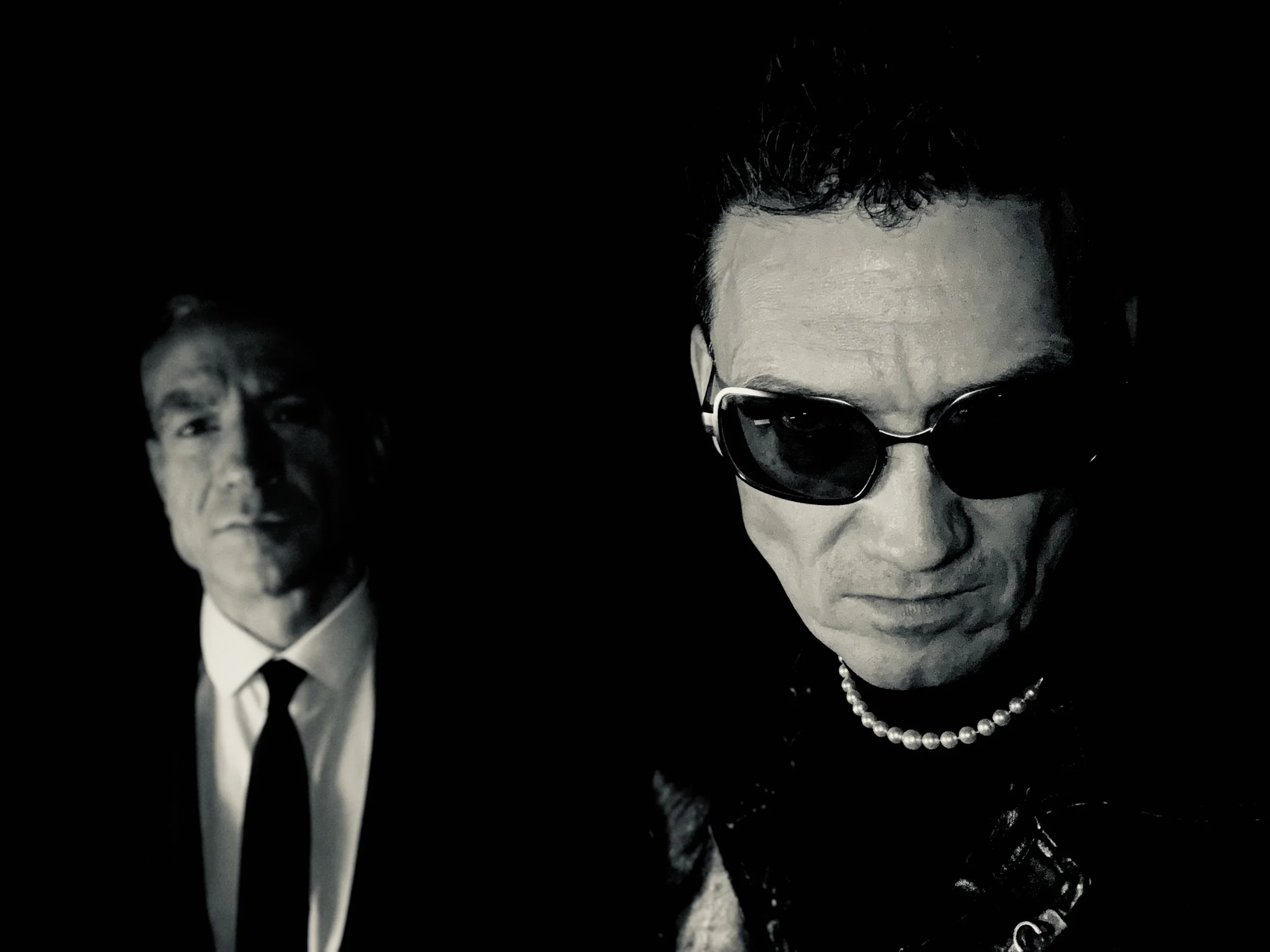
Raymond Watts (Right) and Jim Davies (Left), 2025.
Charles: Speaking of Jim Davies, who also worked with The Prodigy, whom [both Hannah and I] greatly admire. I feel that he contributed to the album's more raw and wonderfully abrasive tone. How did you two first meet and begin co-writing material for PIG?
Raymond: Well, I have a label here in London called Armalyte, who do all the bespoke vinyl things that are expensive and weird and interesting, but very punk rock because we just go, "Oh, we've got a crazy idea." And he goes, "Yeah." I go, "Let's do a vinyl with a pop-up in it, or a fur cover, or with a giant lenticular postcard on the front." And they go, "Yeah." So that's great fun. But Giles, the lovely guy who runs it, suggested Jim do a remix of one of the PIG songs for a remix album, and I really liked the remix. Usually, when I get remixes, I often go, "Fuck, that's much better than my version. I wish I'd done it like that the first time." But Jim's really knocked it out of the ballpark. I went down to see him, and we met for a cup of coffee down in Soho. He's a really nice guy, and he's played in all these fabulous bands. He writes tons of music all the time; he's really quick and very creative, and he's not precious about it. We sat in this cafe, and I said, "Hey, listen, I've got this idea for this song, and it's called Glitz Krieg.” I literally sang it to him, and I said, "I've got this idea. It's in this kind of rhythm." He went, "Oh, alright." I sang some things into his phone. He went away, and three days later, he'd built this whole track. I was going, "That's great." He wrote a couple on this one, then three on that one, and then we've written tons together in the last couple of albums. He's very relaxed; he'll send me some stuff, or I'll send him some stuff. He'll sometimes send me 20-second little bits or fully formed things, and I'll cut them up, drop them out, and change them around. We have a really fun time doing it, which is great. I'm very lucky I met him.
Charles: Hurt People Hurt arrives at a significant moment in time, currently, with the world facing constant public pain and anger. Do you feel that this project touches on such matters, or would you say it is ultimately an introspective record?
Raymond: I can't comment on that. It is what it is, the way you take it. You could certainly see that maybe that resonates on a larger stage. Hurt People Hurt is one of those PIG things that has a double meaning, you know? It means “Hurt People Hurt,” and it means “Hurt People, Hurt.” That resonates maybe with some of the hurt people who are hurting people. Generally, I don't really like to point the finger and proselytize. It's usually about my own miserable little world.
Charles: Since PIG's return in 2016, you've been remarkably prolific with releasing albums, remixes, and collaborations at a pace that, as an indie artist myself, I can confidently say that most artists even half your age couldn't sustain. Can you give us insight into the factors that contribute to this productivity rate?
Raymond: It's really easy. As I plowed my way through the '90s doing Schaft, I also did lots of remixes. Schaft, PIG, PIG, PIG, PIG, PIG, KMFDM, KMFDM, KMFDM 2, PIG 2, Schaft 2, da, da, da, PIG, PIG, PIG, Schwein 2. It was nonstop; get back from Japan, go straight into the studio, knock out a PIG [record], go back to Seattle, record KMFDM, come back, go back and tour, and Schwein. It just never fucking stopped, and it was all fueled by this: “Where am I gonna go next?” I was inspired – in the early '80s – by working with Psychic TV and all these people who [were] always pushing the boundaries, and I have this [similar] habit.
I was in a dark place, and I kept on thinking I had to go to a darker and darker place to get more material to write about, like a real idiot. I was actually cutting bits out of and into myself to create material for the palette I could use to make this music. It was, in a way, the death of creativity. I was living my demise, recording it, and making those into records. It was a descent that only ended in one way when I kind of hit a complete splat wall, and everything stopped.
When I was able to return to [music] by accident and now in a completely different head space; not being up all night and day getting fucked up, I returned to doing music how I started as a child, which was just with a little Philips cassette recorder and a biscuit tin and going, "Nah, nah, nah, nah, nah," and imagining what it was like to make songs.
Then, getting with my mate over the road, getting our first little drum machine. This was like something from space, and getting a bass guitar from Woolworths, literally. And that's how it started, a little tiny drum kit. That was like a child playing in the sandpit, and that's what I've gone back to; the idea of just fucking around, not thinking, "I've gotta carve bits out of myself to make art."
I don't really know where it comes from, and I don't know what my muse is or whatever, but I don't look because I don't wanna scare it away. If I look at where it comes from, I'm worried it might take fright, and then I won't have anything to write about.
At the moment, I've just been working nonstop on a new thing, so it's quite weird to be talking to you about Hurt People Hurt, which just came out a week ago, when there's already other stuff in the [making]. It's great, and I'm really lucky that I've just found this manna from heaven. It's just raining down into my head, and the cup keeps filling up; it won't forever, so I'm enjoying it as much as I can.
Charles: Wonderful! Now, closing off with a more lighthearted question if you don’t mind – In or outside of music, what's the best piece of advice you've ever received?
Raymond: The best piece of advice that I've ever received is something [that is] now my mantra. Actually, there are three lines in “Sex and Suicide” that I managed to squeeze in, and it's having someone to love, something to do, and something to look forward to. That's my holy trinity.
Hannah: That is a great mantra to live by.
Charles: Thank you for this incredible conversation! We really appreciate your time.
Raymond: Thank you for this interview. It's been an absolute pleasure talking to you, and I hope it hasn't been too long. I hope we'll see you when we're next playing over on the West Coast, which hopefully won't be too far away.
Hannah: Yes! We'll definitely come see you.
Raymond: Come by and say hi. It'd be really good to meet in person. Many, many thanks. I'm sorry to keep you up so, so late!
Hannah, Charles: We're night owls. But we're totally used to that anyway. (laughs)
Raymond: (smiles) You're creatures of the night. Yeah? Well, best regards, many thanks, and I'll see you in the not too distant.
Hurt People Hurt is out now via Metropolis Records, available on vinyl, CD, and all major streaming platforms. Coming up next for PIG is the Hurt People Tour, which commences in Lawrence, Kansas, on August 27th and concludes in Detroit, Michigan, on October 18th. With Cyanotic as the support act, the tour currently comprises 44 shows, with further dates to be added.
FASE would like to thank Raymond Watts for his time, kindness, and generosity, and Gary Levermore at Red Sand PR for making this conversation possible.
