
mono no aware — a digital conversation with Momus
Interview conducted and edited by the FASE editorial team over email.
To perceive someone as multifaceted as Nick Currie, who operates under the moniker Momus, through a rigid, singular lens would mean committing the ultimate travesty. Currie was born in Paisley, Scotland, and has spent his life assembling one of music's most prolific and least classifiable bodies of work. His discography currently spans well past forty albums. Currie's nomadism has carried him through London, Paris, Tokyo, New York, Berlin, and Osaka – his distinct fingerprint is prominent on the records made in each location. Alongside his musical endeavors, Currie has published novels, written criticism, and staged performance works in galleries and museums, operating less as a musician who occasionally writes than as a writer who conveys himself most eloquently through songwriting.
What you’re about to read came together over several months of emails, with Currie turning out to be exactly as discursive, self-aware, and unhurried as his catalog suggests.
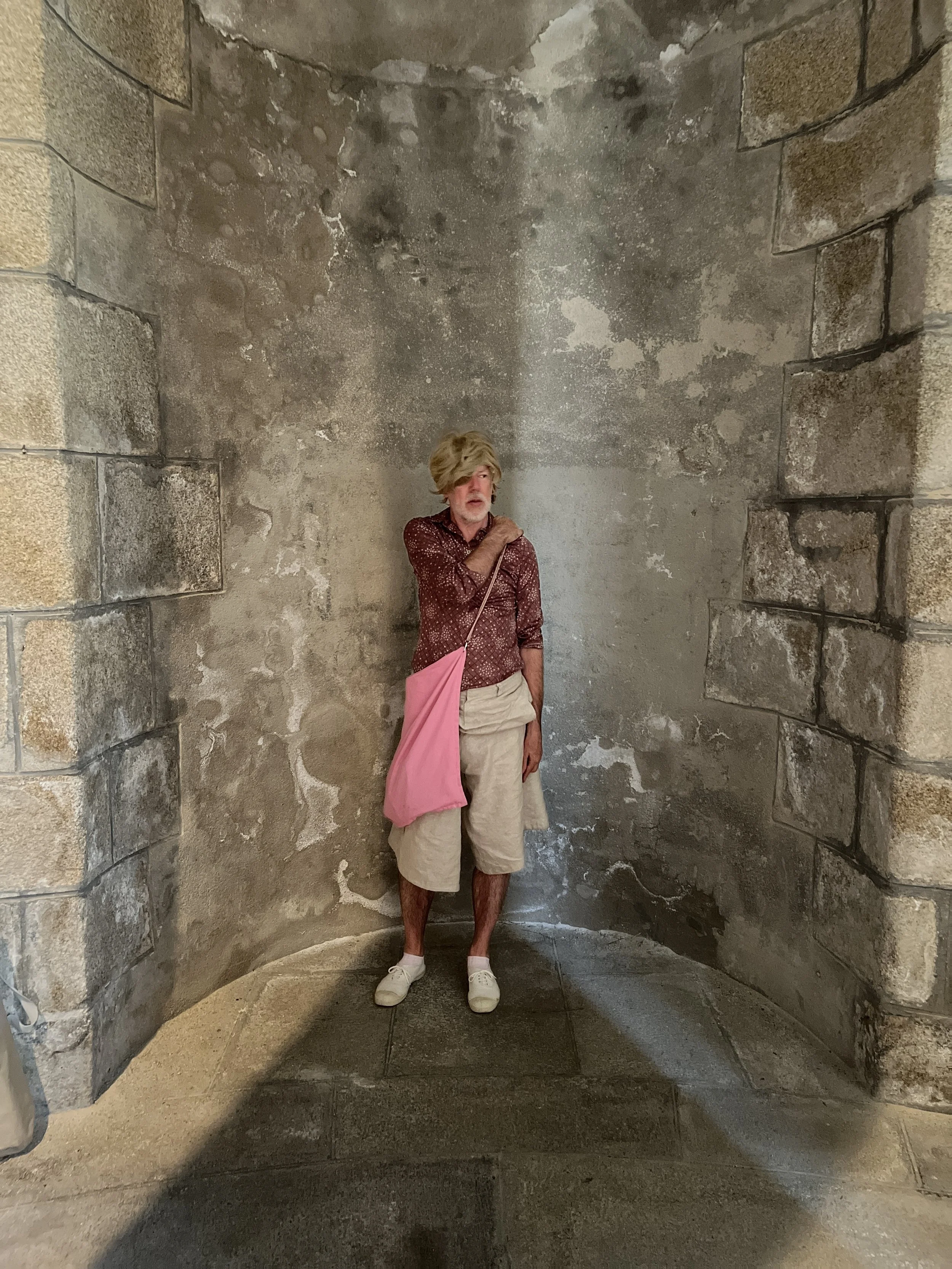
Before Momus, there was The Happy Family, which put out some material on 4AD. What pulled you toward music in the first place?
Actually, the year I got interested in music was 1967. I was 7. I think technology played a major part in the appeal. My dad was doing a Linguistics doctorate which involved recording children talking and singing, so he brought home a Uher 4400 Report, a beautiful little reel-to-reel machine which looked like a spy device. We recorded several episodes of Top of the Pops featuring groups like The Move and The Who, then he recorded me improvising pop songs on the family piano. It wasn't as if I had a musical instrument that I was already writing songs on; it was more the need to perform, to improvise, for this neat little tape recorder. And, listening to The Beatles’ records of the time, what I really liked was that they too were about having fun with the technology of recording. Psychedelic culture was of course about drugs — something I couldn't, as a child, really know about — but it was also about a certain experimental joy in technology.
What was that post-punk moment in Scotland like to come up in?
At the end of the 70s I was listening with excitement to Wire, Magazine, Talking Heads, Gang of Four, The Passage, PiL... And independently I was reading Kafka, really losing myself in his anxious charm. Then suddenly there were local New Wave groups, Scottish ones: The Associates, Simple Minds, The Fire Engines, Josef K. The Kafka connection (and the fact that they were from Edinburgh) immediately drew me to Josef K, who were a scratchy mashup of Talking Heads and The Velvet Underground. It was perfect! They may not have had the polish of The Associates or the experimental edge of Simple Minds (around their second album, anyway), but they felt like they were mine. And when I somehow managed to form a band with the ex-members after they split up prematurely, they actually were mine! Nothing so exciting had ever happened to me. And signing to 4AD was the icing on the cake.
You took the name from the Greek god of mockery, banished from Olympus for criticizing the other gods. Four decades in, does the trickster framing still feel like a fit, or has your relationship to that role changed?
Hmm, interesting question! I think in the 21st century being "a Momus" began to look more like being an online troll or a disrupter, in the Steve Bannon sense of pointless destruction just for the sake of it. Also, I started spending more and more time in Japan, and admiring the Japanese sense of harmony, of collectivity, of self-suppression for the common good. So being a transgressive poltroon who contests everything felt less radical to me, and a bit exhausting. Also there's a side of me which wants to avoid intensity, to keep things light and even comic. And actually that still works, because Momus was definitely the most comical of the gods, a sort of immortal Mr Bean.
Circus Maximus opened your solo career in 1986 with the Bible interpreted through its stranger, more transgressive corners, and the records that followed: The Poison Boyfriend, Tender Pervert, Don't Stop the Night, kept pulling at taboo. Looking back, were those albums driven by a genuine impulse toward transgressiveness, or was it a young songwriter testing the limits of folk and, eventually, pop music’s conventions?
That seemed to me to be what an artist did. The most interesting writers seemed to break through on the literary scene via scandal, moral panics, and calls for censorship. Even someone like Ian McEwan, who today seems very tame, was writing very shocking short stories in the 70s. But if you look at literary history, you find that even someone like Flaubert was apparently undermining French society because he dared to depict adultery in Madame Bovary. Artists shock, but then their scandalous works turn into established classics.
I attended lectures at the LSE (I had a friend who was studying there) by a sociologist called Christopher Badcock whose idea was that you could put society on the couch and psychoanalyze it critically — as though society itself were sick. I really took that idea and ran with it! The trouble is that, ironically, the music press then began to re-individualize the material: to say that I, personally, was sick, a pervert, a sexist, and so on. So my 1960s anti-psychiatry ideas ran headlong into the nascent identity politics of the 1980s, with fairly dire consequences for me.
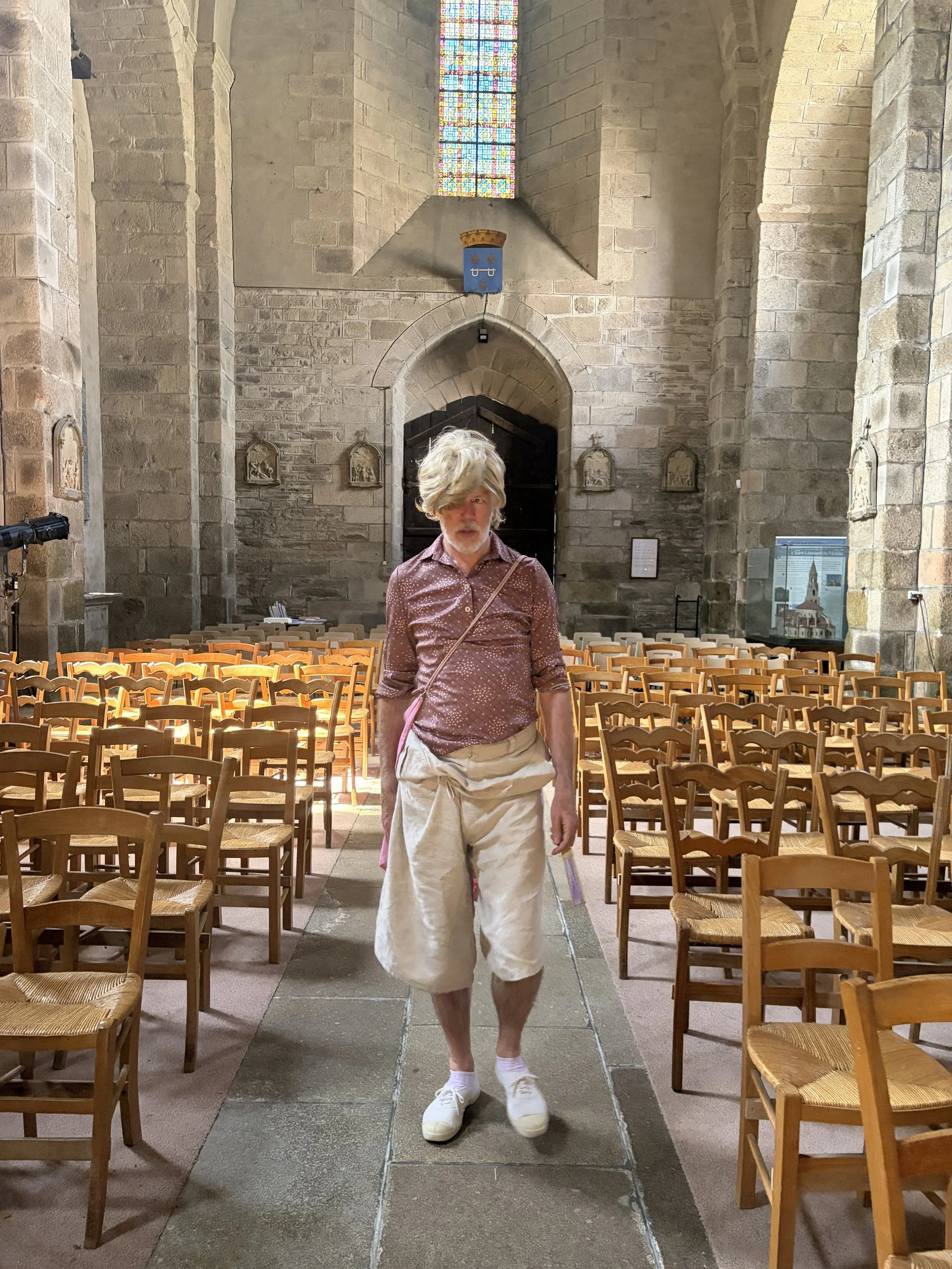
Having been involved in the Shibuya-kei scene since the early 90’s, how did you first come into contact with artists like Kahimi Karie?
I first visited Japan in 1992. My hotel, the Tobu in Shibuya, was next to a record shop called Wave. There was a big display at the front of the store for an artist called Poison Girl Friend. Since my second album was called The Poison Boyfriend, I thought this was exciting. I bought the record and really loved a song called “Hardly Ever Smile,” with a string arrangement that sounded like “Unfinished Sympathy” by Massive Attack. I ended up producing the second Poison Girl Friend album, Shyness, in London the following year. I also visited Keigo Oyamada (Cornelius) in Tokyo and met his girlfriend Kahimi Karie, a photographer who'd just started putting out records on a label called Cru-el. I ended up producing many songs for Kahimi, who'd liked the work I'd done with Noriko (Poison Girl Friend). I did other records for people like Emi Necozawa and Mari Hamada, and made a remix for Pizzicato Five.
What was it like working with her in different places around the world, both with touring and producing her albums?
It was an interesting symbiosis: she would have ideas for styles we could use, or subjects she'd like to broach. As we got to know each other, I got a feel for the kind of things she liked. I have a girly side to me, and I could tap into that quite happily. Latterly, I started to feel a bit guilty for speaking on Kahimi's behalf, so it was almost a relief when she started to write her own material. But the songs of hers that people most identify with her are, I think, still the ones from the era of our collaboration. Those are her hits. When we toured the US together, I was surprised that she was seen — on the college circuit, anyway — as an appendage to my fame, whereas in Japan it was the other way around. There was never any actual romance between us, but people always seemed to assume there was. Sometimes, when she got a new boyfriend, there would be tensions, especially if the boyfriend was musical and thought he could muscle into her songwriting and take over from me. Ultimately, none of them could, but KK moved on to other, more experimental collaborators, like Jim O'Rourke and Otomo Yoshihide.
Likewise, you’ve worked as a guest vocalist and lyricist for Ken Morioka on his solo debut album. How did you two meet and begin co-collaborating, especially on “The Sadness of Things,” where the principle of ‘mono no aware’ plays a defining part of the song concept?
That happened through a mutual friend in London, Dominique Brethes, who had a studio in Brixton and was producing Ken. They already had the music; I just wrote the lyrics and sang it. I was interested in the so-called "pathetic fallacy", the Romantic idea that nature "feels with us", when in fact it's indifferent to us. Is there a sadness in things? No, but we project our feelings onto everything we experience, so that's how it feels to us. My narrator is just awakening, if you like, from this delusion and seeing the actual indifference of nature, and his insignificance in the great scheme of things. I subscribe to an anti-teleological worldview: there is no purpose to things that happen or to history. I hate the lazy idea that "everything happens for a reason". No it doesn't!
On your website, you pronounced Shibuya-kei dead back in 1998. As someone who was a catalyst and vanguard of the scene, how did you feel about the proliferation of the genre in the West, and their attempts at recreating that same pop sensibility? Was that the turning point for the scene?
I was just doing the stupid hipster thing of trying to be the first to declare something dead, just to show I knew about it! But by 1998 it had sort of run its course, a bit like Britpop in Britain. Although — to distinguish them — Shibuya-kei was really a cosmopolitan and eclectic moment of openness to the world, led by the incredible explosion in Japanese record shop stocks in the 90s, whereas Britpop reacted to the global revolution (and to American Grunge) by turning backward and inwards and celebrating Britishness and the Beatles and so on. I'm not really aware of Shibuya-kei having a big influence on the West, but I do remember when Raygun magazine did its Big in Japan edition in August 1998, I thought: "Oho, something's going on here!"
You mention admiring the Japanese sense of harmony and self-suppression for the common good, and finding the transgressive posture exhausting by comparison. Did working inside Japanese pop actually change how you wrote, or did you keep the two sensibilities separate?
I think I was given to selling Japaneseness — or my interpretation of it — back to the Japanese. For instance, Kahimi's big hit “I Am A Kitten” was me making a small, cute version of Natsume Soseki's novel I Am A Cat. I would also latch onto the parts of the West that Japanese people were fond of. When I wrote the song “David Hamilton,” for instance, that was because Kahimi had made a T-shirt using one of his photographs. “Le Roi Soleil” was a Versailles-oriented fantasy. And so on. I was looking back at my own culture through Japan-tinted glasses, which re-enchanted it for me. And in my private life something similar was happening, since my wife came from an Asian, a Bangladeshi culture. I could reconcile myself to some of the elements of my own background I'd previously rejected by introducing her to them. You could see this as the erasure, in me, of a spirit of mean criticality based in Freud's "narcissism of minor difference", which is, in a way, one of the curses of the West. Bitchy infighting between people who believe almost the same thing. Looking at the West from Japan — and, very importantly, filtering it to remove our toxicities, or even add their own different toxicities — made everything look very different. The other end of the telescope! And yes, all that transgression stuff started to look silly in a context where the taboos weren't really in the same places. I found it totally refreshing that the Japanese seemed to find liberty in the warm embrace of social roles, since the cliché in the West is that you have to rebel against them to become free, even when it's not at all clear what else there might be, and that in fact the "freedom" you seek might just turn out to be loneliness or emptiness.
Stars Forever came out of a lawsuit, with thirty portrait songs sold at a thousand dollars each to pay a settlement. Given what you've said about scandal being the artist's route, was there something almost fitting about turning a legal cataclysm into a commission model? And did the constraint produce work you wouldn't otherwise have made?
Yes, the irony was totally intended. As if I were saying: "Okay, YOU may not like having a song about you, but there are people out there who would love it." I didn't intend insult or scandal. We both had the same promotions team, and I seriously thought we could do joint interviews and rave about each other's brilliance. And in a sense, we both used it to promote our records that year, just not in a nice collaborative way. I suppose the "conflict" made for a better story, and the press loved it. Also, Americans love get-rich-quick schemes, and my patronage portraiture scheme appealed to that.
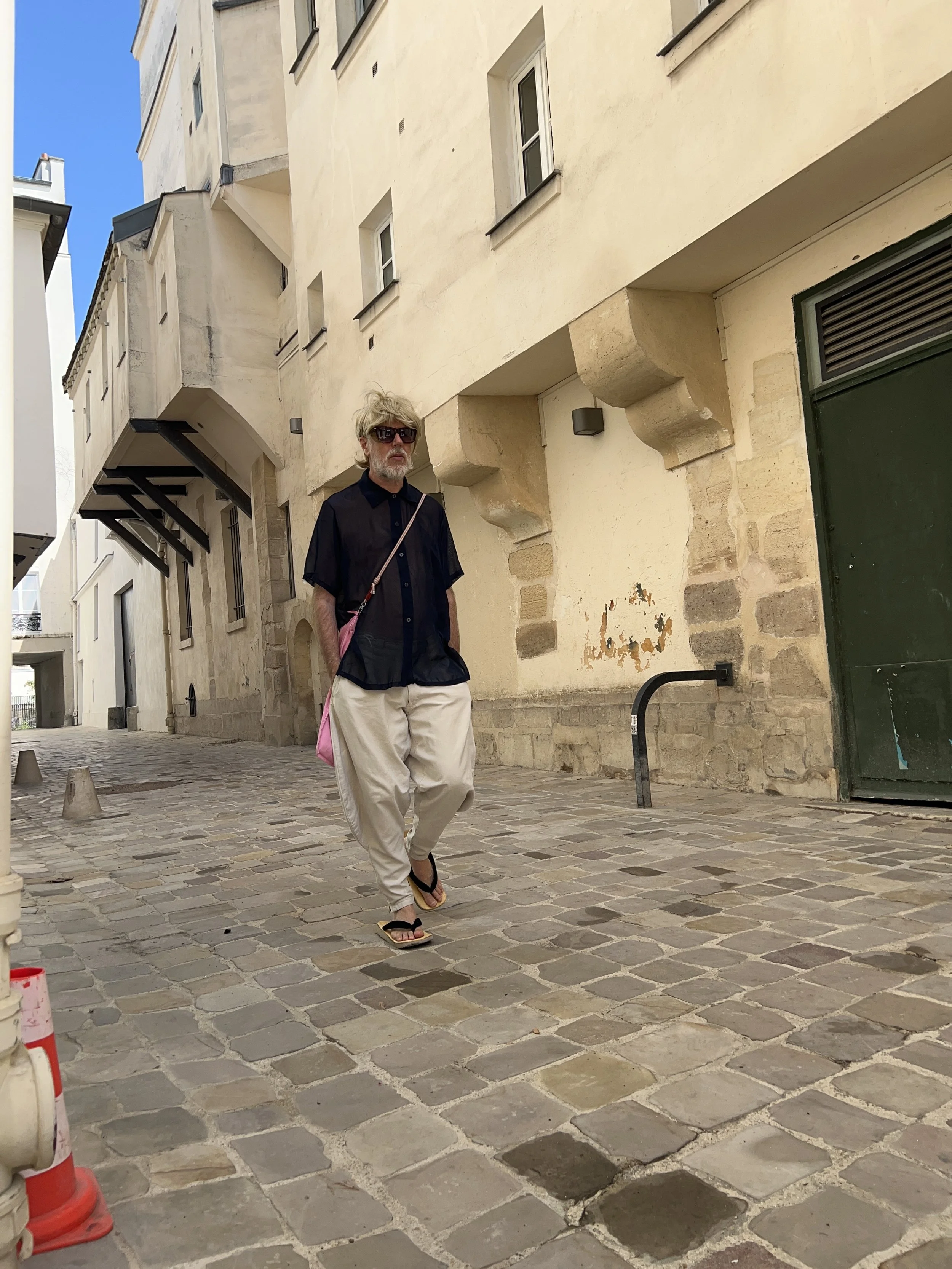
You've carried the same name across songs, novels, criticism, and museum performances. Do you inhabit Momus differently in each form, or is the point that the sensibility doesn't change and only the medium does?
A bit of both, I suppose. But there's a strong gravitational pull in each medium from the people I most want to imitate in that particular form: David Bowie in pop music, and in literature people like Italo Calvino and Raymond Queneau. So that gives them different accents, different energies. In the visual art world, my work was more like performances by Andrea Fraser or Joseph Beuys.
You described psychedelic culture as partly an experimental joy in technology, separate from drugs. Does that describe your relationship to the internet too? You've spent much of your career online, from early blogging onward. Has it turned out to be the medium you hoped for?
My sense now is that there are recognizable cycles that lure us into using new technologies. First they're reviled — the period of moral panics, in which the tech will basically undermine morality and destroy the world. (Right now we're in that phase with AI.) Then there's the carrot phase: the tech will make us all into Leonardo da Vinci, usher in universal creativity and world peace. Then comes the stick: if you don't use this tech, we're going to have to arrest you and put you in a detention center. I do think there's "enshittification" for all the reasons Cory Doctorow has outlined, but also just because things fall apart and move on, and new tech comes along with its own new moral panics, etc. I tend to be an early adopter, so I was on the internet from 1992, into multimedia computers and CD-ROMs from 1993, started a website in 1995… In terms of music production, I embraced sequencing and sampling from 1990. All these digital tools were fantastic to have, because they made super-cheap home production and promotion possible. I've gotten very good and very fast at digital editing, which is why I've made so many more albums and videos than just about anybody else, not to mention all the blogs, vlogs, and photos. I think it was crucial for developing my own style to be very hands-on with these technologies. I embraced AI music production when it was still in its glitchy, interesting phase and made two albums with AI, but have now moved on from that because I don't want to give up one iota of my control of the production process. It's just so interesting to be hands-on with the music and to make it wonky in a way machines very rarely recommend. But the internet feels really stale and boring and annoying to me now, so when I go out I take a book. And not even a new book, but a book from a different era, a different culture.
You started making music because a tape recorder arrived in the house and you wanted to perform for it. Decades on, is your motivation to keep creating art recognizably the same?
I'm definitely a performer. My mother tells me that I was a bit sad until my brother came along when I was two, and I had a captive audience to perform to! I really feel that there's only a point to me when I'm making art of some kind. It gives my life meaning. That's when I'm a plane in the air or a fish in the water. The moment in which nothing much turns into something is a really sacred moment for me, and when a new song sounds great to me, I actually cry with joy. That happened most recently with the song “The Very Secret Life of Me. “
Is there a record of yours you'd point a newcomer toward that isn't the one people usually name?
Every album has a different set of themes and styles, so people just need to find the one that speaks to them. It will take some foraging, but John Robinson's two books (soon to be three) about my work might help. They're called Famous For Fifteen People and Folktronics. Gay or trans people might like Tender Pervert or Issyvoo, for instance. Japanophiles would like Glyptothek. People who like Brechtian pirate music might like Pillycock. The new album, Humperstinck, is sort of charmingly seasick pop. Ballyhoo is K-pop and Quietism is bossa. And so on.
To close: a question we ask every interviewee – what is the best piece of advice you've ever received?
I think Brian Eno's line "never get a job" is pretty good. It's a huge luxury to have all your time for yourself and to use it to construct a whole set of aesthetics and values. It really pays off later in life. Never get a job, but work hard in your own time on building your own world.
FASE would like to thank Momus for his insight and generosity, and Rusty Santos for connecting us, making this conversation possible.
